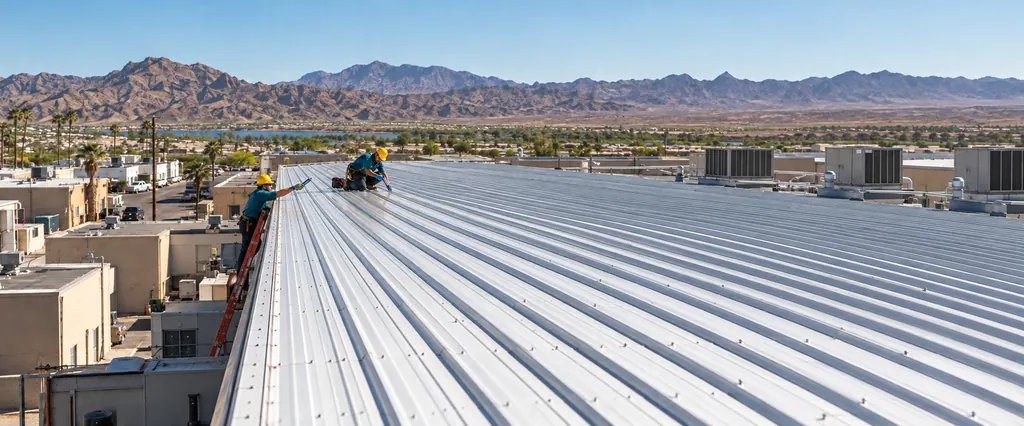
Commercial Metal Roof Repair
Steel production buildings with metal roofs need fastener, lap, and rust repairs, often alongside skylight panel swaps.
Commercial metal roof repair for steel buildings
We handle industrial roof repair in Bullhead City on large roofs over production floors, from exhaust and makeup air curbs to cracked skylights, planned around your shifts.
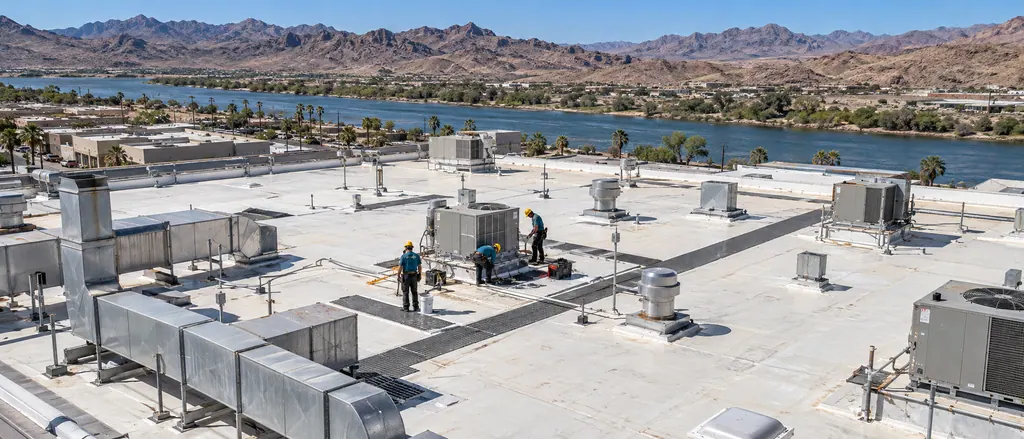
Most industrial repairs happen with production running. A few need a short equipment shutdown, planned ahead with your maintenance lead.
Large roofs over production space carry more penetrations and foot traffic than most. These five spots take most of the repair work.
Hot, oily exhaust breaks down sealant and membrane at stack curbs faster than the open roof. Curbs get new base flashing in a material rated for that exposure.
Large units vibrate and get serviced often, which loosens curb flashing and tears membrane where technicians kneel and set panels down.
Plastic skylight panels crack and yellow, and their curbs collect blown debris. Fragile panels also put anyone walking nearby at risk, so they are flagged before work starts.
Routes to rooftop units show scuffed, thinned membrane. Walk pads along those paths spread foot traffic and protect the sheet between repairs.
Wide roofs move a lot of water to a few drains. A clogged strainer backs water across many bays, so drains are cleared and their clamping rings checked.
Repairs on industrial roofs are planned as a list of details. Each line below can be scheduled on its own.
| Repair | What It Fixes | When It Is Enough |
|---|---|---|
| Curb reflash | Exhaust fans, makeup air units, and process stacks | The curb framing and deck around it are solid |
| Skylight panel swap | Cracked or yellowed panels over work areas | The skylight curb still sits square and dry |
| Section repair | Wet insulation and failed membrane in one zone | Moisture readings stay local to that zone |
| Walk pad and path repair | Scuffed membrane along service routes | Wear has stayed on the surface of the sheet |
Targeted repairs keep production dry and on schedule, with work sized to the zones that actually leak.
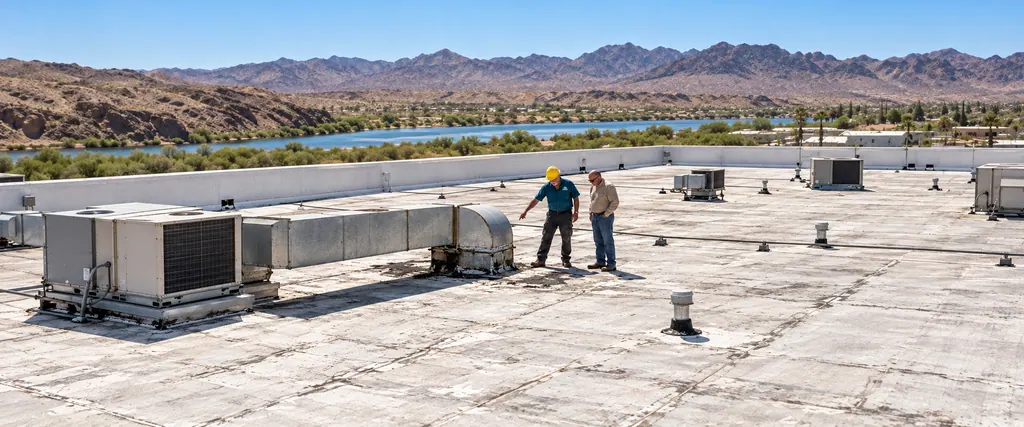
Fixing curbs, skylights, and failed sections keeps water off machinery, finished goods, and floors, and planned work replaces emergency calls during the next storm.
Shutdowns of exhaust fans and rooftop intakes are booked with your maintenance lead, so repairs line up with planned downtime.
Walk pads mark a route around fragile skylight panels, which protects both the membrane and anyone servicing equipment.
Repairs zone by zone fix the leaking areas and leave dry sections of a large roof in service for years more.
Call and tell us what sits under the leak. Tarps or catch pans protect equipment while the roof above is repaired.
Five steps, planned with your maintenance lead before the first cut.
We walk the roof with your maintenance lead, mark exhaust outlets, intakes, and fragile skylights, and take moisture readings across each zone that shows leaks below.
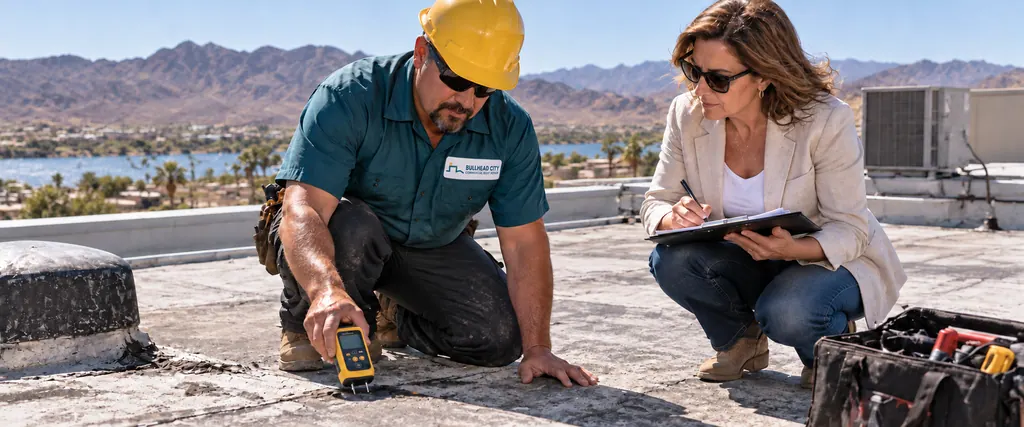
Fan and intake shutdowns, hoist days, and the walk route around skylights are agreed with your maintenance lead before anyone starts cutting membrane.
Tarps or catch pans go over equipment under any opened deck, and the floor area below is roped off while that section of roof stays open.
Each zone is opened, dried, and closed before the next one starts, with heat welding and adhesives kept well away from open intakes.
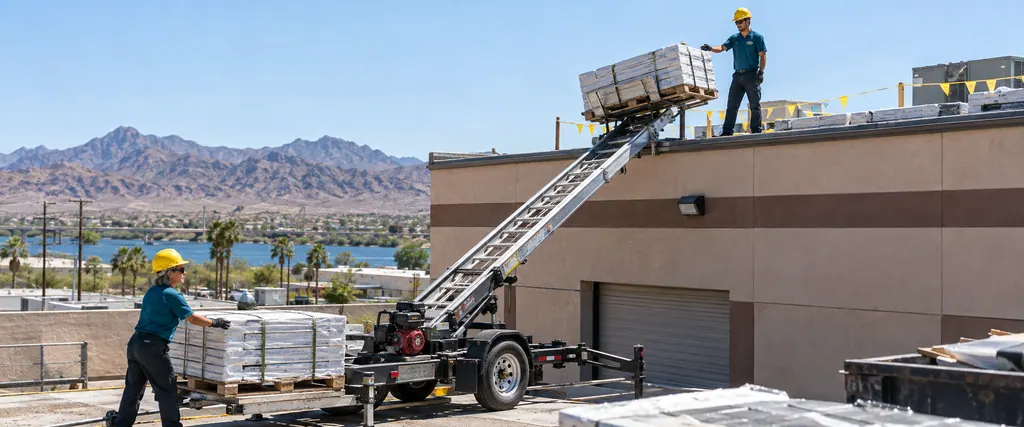
Equipment comes back online, flashing at each curb is checked again under running conditions, and the repaired zones are walked after the next heavy rain.
Industrial roofs often need one of these two services as well.
Steel production buildings with metal roofs need fastener, lap, and rust repairs, often alongside skylight panel swaps.
Commercial metal roof repair for steel buildings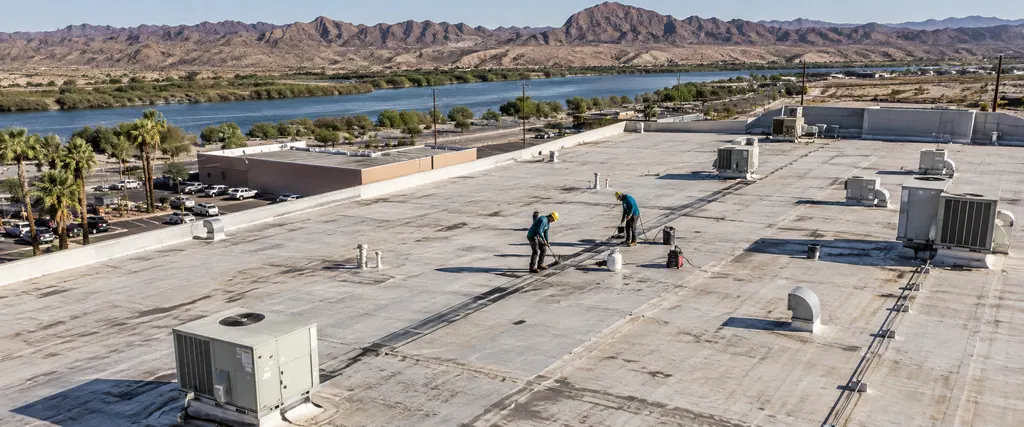
Low-slope roofs over plants and warehouses leak at seams and drains like smaller buildings, just across far more square footage.
Flat roof repair for large low-slope roofsBy planning around your shifts, equipment, and exhaust before anyone climbs up. Exhaust fan and air intake shutdowns are scheduled with your maintenance lead, heat-welding and adhesive odors stay away from open intakes, catch pans cover equipment under any opened deck, and walk pads mark a safe route around fragile skylight panels.
Your maintenance lead or plant manager, plus anyone who runs the rooftop equipment. They know which fans and intakes can shut down and when, where process exhaust leaves the roof, and which skylights sit over workstations.
Hot, oily, or chemical exhaust softens and breaks down membrane and sealant near the outlet. The damage shows as soft, discolored, or cracked sheet around stacks, and the fix uses flashing materials rated for that exposure plus any stack extension your equipment supplier recommends.
Yes, with the area below protected. Most repairs stay on top of the membrane and leave the deck closed. When the deck does open, the floor below is roped off and covered for that section only, then reopened once the roof is closed up.
As fragile surfaces. Panels are flagged, walk pads route traffic around them, and replacement panels go in from above with the space below cleared or covered. Cracked panels are swapped for the same profile so they seal to the curb or the metal around them.
Yes. Each section is opened, dried, and closed before the next, which keeps the rest of the roof weathertight and lets production plan around one zone at a time. Moisture readings decide where each section starts and ends.
Tell us what runs under the leaks and when you can shut equipment down. We plan the repair around both.
Leave a name and number and we will call about the leak or repair. Or call now: +1 (928) 436-4825.