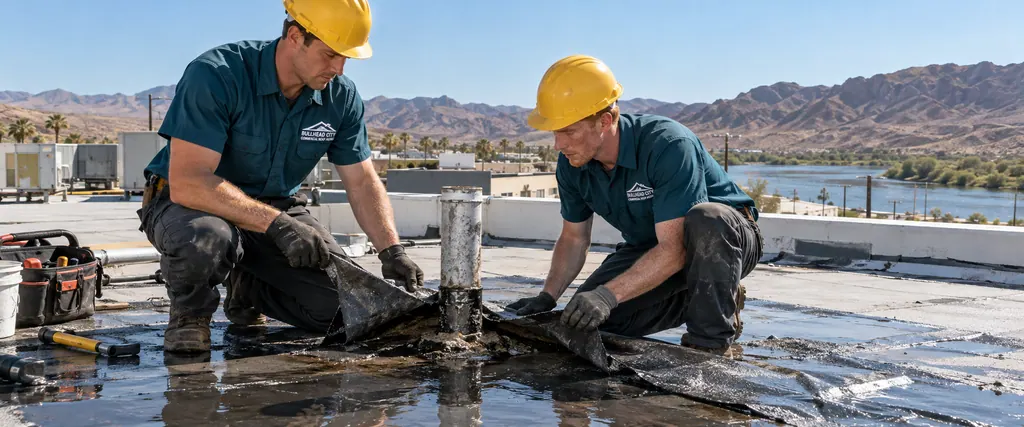
Commercial Roof Leak Repair
Leak tracing finds the entry point behind each stopgap, so the permanent repair lands on the detail that failed.
Commercial roof leak repair in Bullhead City
We slow active leaks on Riviera commercial roofs with logged stopgaps, then make the permanent repair under a City of Bullhead City permit once the roof dries.
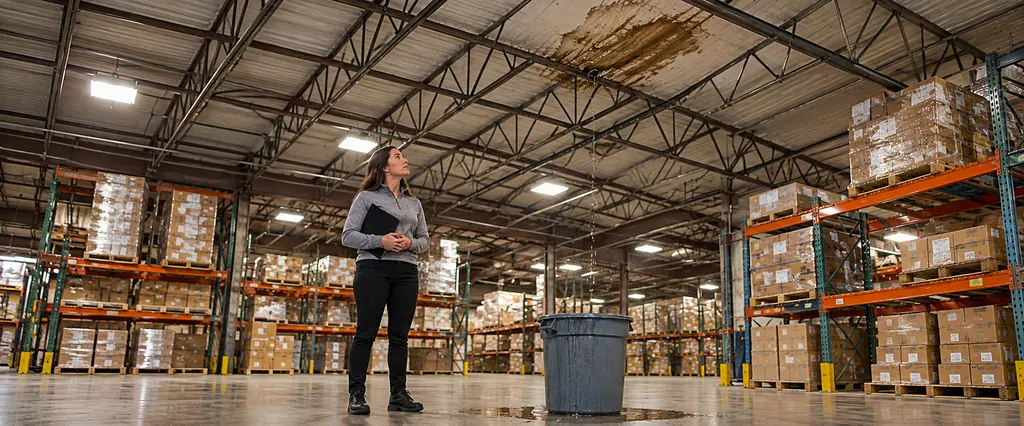
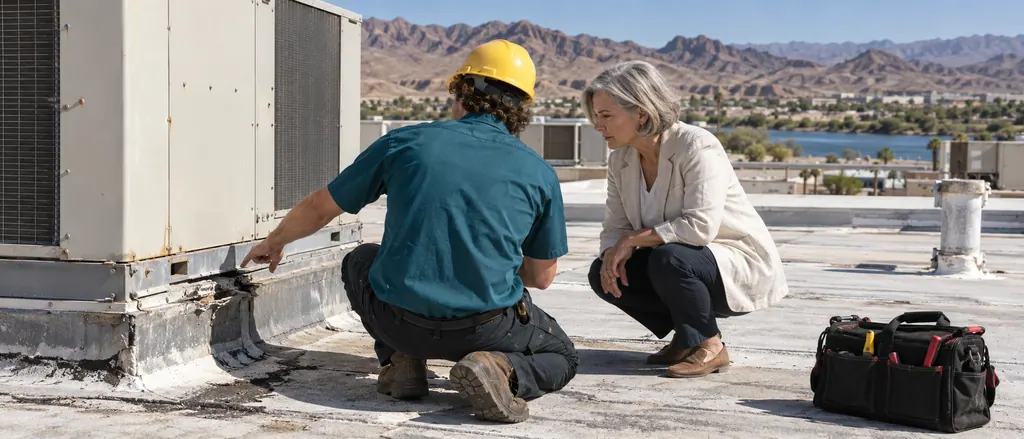
Riviera sits inside Bullhead City limits, so roof work here runs through the city's Development Services. The city's list of permit-exempt work leaves out roofing, which makes the permanent repair after a stopgap permitted work.
A stopgap buys the time to get there. Compatible tape over an open seam, a cleared drain, or a weighted tarp over a damaged panel slows the water until the surface is dry enough to bond new material.
These conditions show up on Riviera buildings while a leak waits for its permanent fix. Each one takes a different stopgap.
Compatible tape over a lifted lap seam seals out the next rain. It stays only until the lap is dry enough to clean and reweld.
Pulling sediment out of the strainer drops the water level at once, and it shows whether the clamping ring underneath leaks too.
Sealant and tape across the gap at a rooftop unit curb hold until the base flashing can be replaced as one piece.
Flashing that peeled off a parapet is pressed back and weighted, then fully rebuilt once the wall and membrane are dry.
A temporary patch inside a ponding ring softens quickly, so it is checked after each rain and replaced first.
Moving from stopgap to permanent repair quickly limits how far water spreads, and the permit keeps the work on record with the city.
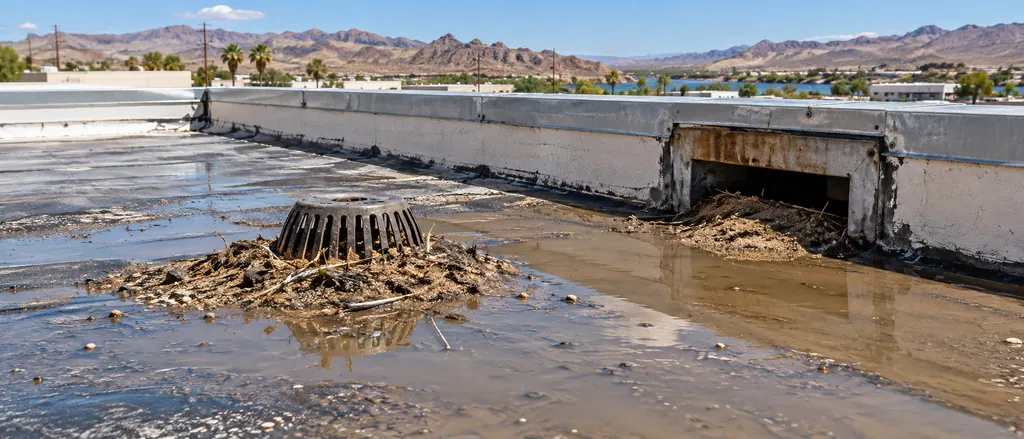
Replacing each logged stopgap with a welded or flashed permanent repair leaves the roof with one documented fix per leak, in place of layers of tape and cement that hide the next problem.
A city permit for the permanent repair puts the roof work on file, which keeps the repair history clear for the next owner or tenant.
Fast follow-up after a stopgap keeps water from soaking far past the leak, so less insulation has to come out.
Permanent work waits for a dry surface, so materials bond and seams weld the way they are meant to.
Two services cover most repair work on Riviera roofs.
Leak tracing finds the entry point behind each stopgap, so the permanent repair lands on the detail that failed.
Commercial roof leak repair in Bullhead City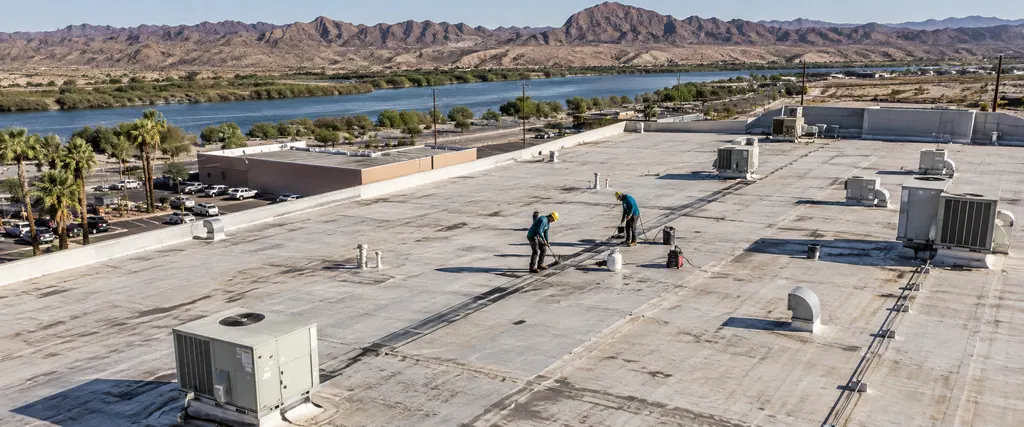
Seam rewelds, drain resets, and curb reflashing replace the tape and cement used to hold back an active leak.
Flat roof repair for seams, drains, and curbsCall and describe where water is entering. A logged stopgap can slow it until the roof is dry enough for the permanent repair.
Five steps from the first wet ceiling tile to the permitted repair.
We check the roof above the active leak, find the seam, curb, or drain feeding it, and decide which stopgap fits that detail while it is still wet.
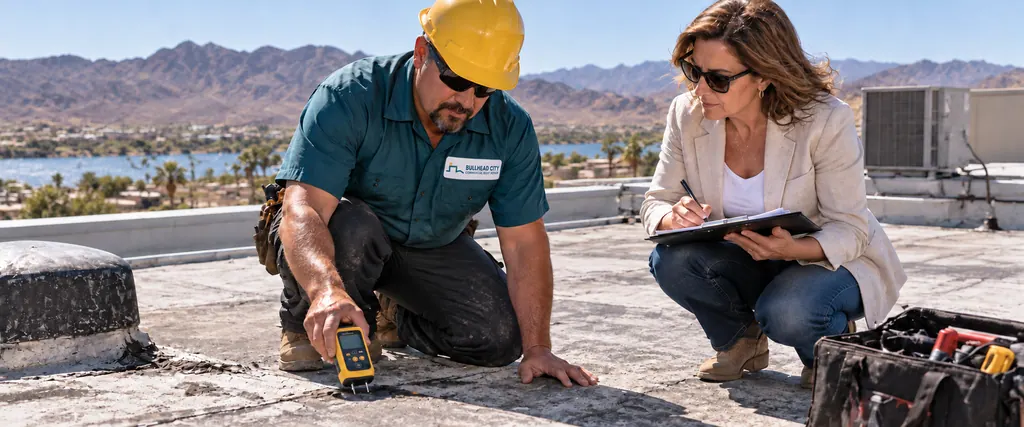
Tape, a cleared drain, or a weighted tarp goes on, and each one is photographed with its location so nothing temporary gets forgotten up on the roof.
Riviera addresses fall under Bullhead City Development Services. The permit for the permanent repair is confirmed with the city before membrane or flashing is cut.
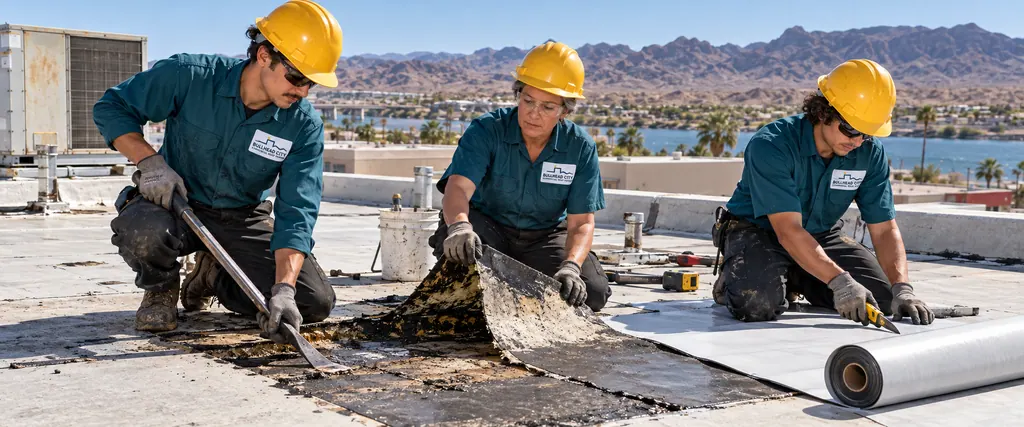
Once dry, the stopgap comes off, wet insulation is cut out, and the seam, curb, or flashing is rebuilt with material that matches the roof.
Stained tiles are watched through the next rain. A dry ceiling under the repaired spot confirms the leak is closed before the tiles are replaced.
We also repair commercial roofs in these nearby communities.
Leak tracing on strip retail roofs down SR 95, where water crosses suites before it drips through a ceiling.
Rust at screws and laps on older steel building roofs, sorted into coat or replace panel by panel.
Seam and flashing repairs on sun-worn flat roofs before anyone considers a reflective coating.
Peeled membrane and lifted wall flashing on exposed roofs near the I-40 crossing, dried in first.
Yes. Compatible tape or roof cement over an open seam, clearing a clogged drain or scupper so water stops backing up, and a weighted tarp over a damaged panel all slow an active leak. Each stopgap is photographed and logged, then replaced with a permanent repair once the area dries out.
Only until the area dries. Tape and roof cement are meant to slow water, and they soften or lift with sun and ponding. Stopgaps should be replaced as soon as the surface is dry, and any patch sitting in a ponding ring is checked after every rain.
It helps when it is documented. Arizona's Department of Insurance and Financial Institutions advises photographing damage before any urgent temporary fix and calling your insurer before permanent repairs. Keep receipts for tarps and patch materials with those photos.
Each one comes off during the permanent repair. The log and photos show where every temporary patch sits on the roof, so none are left behind to age in place and hide the next leak.
Yes. Riviera is inside Bullhead City limits, so building permits for roof work go through the city's Development Services. The city's list of permit-exempt work leaves roofing off, so plan on a permit for the permanent repair.
Some can. A tarp weighted over a damaged area and a cleared drain help even in wet weather. Tape and sealants need a reasonably dry, clean surface to stick, so they go on between storms or once standing water is pushed off.
New membrane, adhesive, and sealant need a dry, clean surface to bond. Welding or gluing over damp insulation traps water under the patch, where it spreads and blisters the new material within a season.
Tell us where water is coming in and what sits below it. We slow the leak first, then make the lasting repair.
Leave a name and number and we will call about the leak or repair. Or call now: +1 (928) 436-4825.