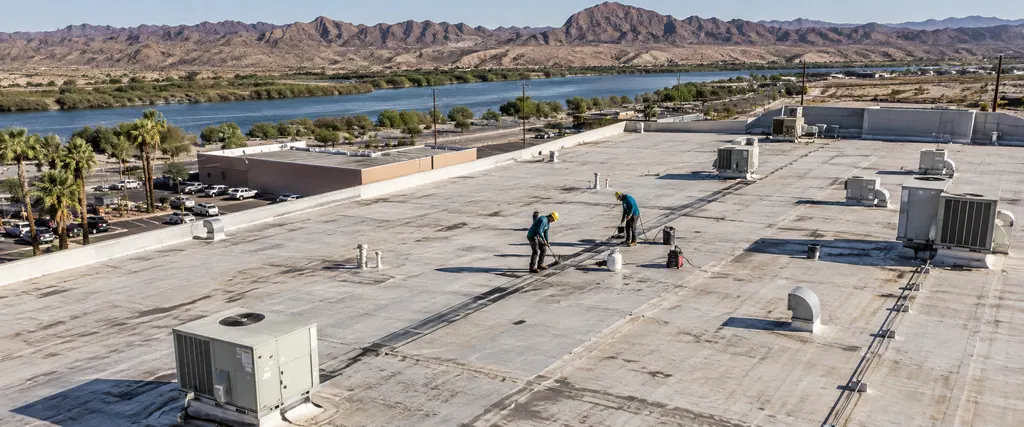
Flat Roof Repair
Peeled sheet, lifted wall flashing, and torn curb flashing are rebuilt on low-slope roofs once the deck is dry.
Flat roof repair after wind damage
We repair wind-peeled membrane and lifted flashing on exposed Topock commercial roofs near the I-40 river crossing, drying the roof in first and rebuilding after.
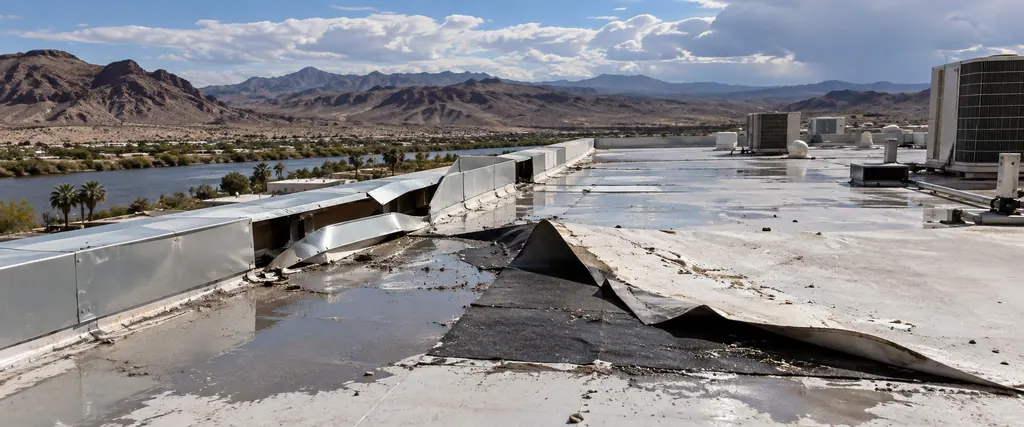
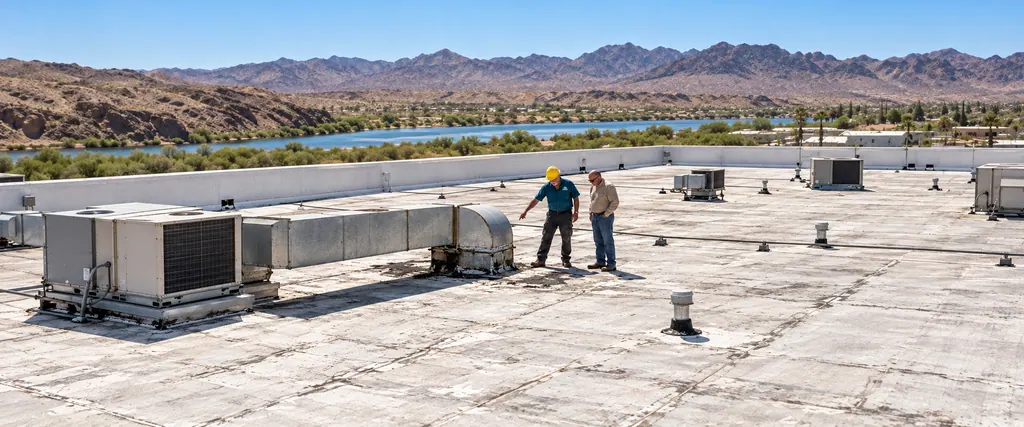
Roofs near the I-40 river crossing sit out in the open, so exposed edges and wall flashing get checked for wind lift after strong gusts. Once membrane peels, each gust pulls it further back.
Commercial roof repair here starts with drying in. Loose sheet is weighted or temporarily secured, then re-adhered or replaced once the deck underneath is dry.
Wind damage follows a pattern on exposed roofs. These five spots show where it starts and where it spreads.
Gusts get behind flashing where its top edge has loosened. It is pressed back, secured under a termination bar or counterflashing, and sealed.
Once a lap opens, wind gets under the membrane and peels it back across the field. The loose sheet is cut back to firmly adhered membrane and replaced.
Wind shifts rooftop unit panels and tears flashing at the curb. Curb flashing is rebuilt once the units are secured by their service company.
Storms blow sand and trash into drains and scuppers, so water backs up behind the next rain. Drains are cleared during every wind repair.
Rain that follows wind soaks the insulation under a peeled area. Wet board is cut out and replaced before new membrane goes down.
Fast dry-in and a lasting repair stop wind damage from turning into water damage inside the building.
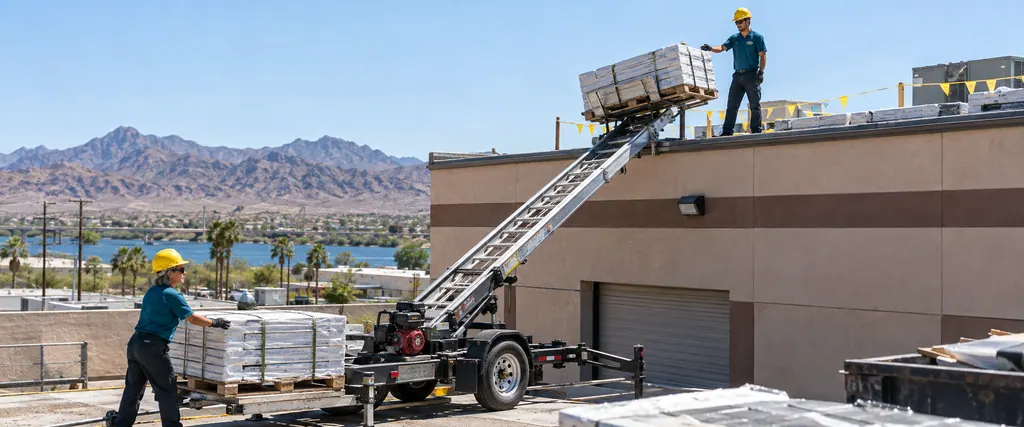
Securing peeled sheet and lifted flashing right after a storm keeps the next gust from tearing more membrane and keeps rain out of the insulation.
Ground-level and roof photos with dates show what the wind did, which helps if the damage becomes an insurance claim.
Catching a peel early keeps it to a small section of membrane rather than a large torn area.
Rebuilt flashing ends under a termination bar or counterflashing, so wind has less loose edge to grab.
Wind damage in Topock usually lands in one of these two services.
Peeled sheet, lifted wall flashing, and torn curb flashing are rebuilt on low-slope roofs once the deck is dry.
Flat roof repair after wind damage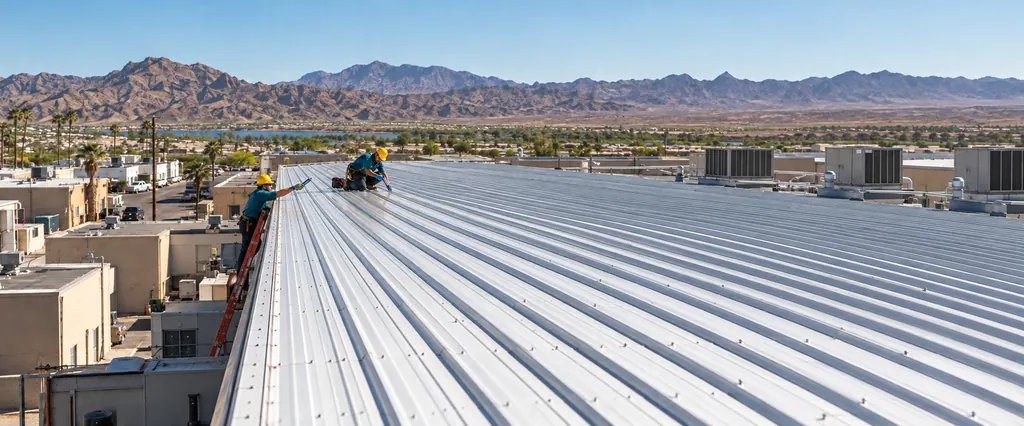
On steel buildings, wind loosens trim, lifts panel edges, and backs out screws, which are refastened and resealed.
Commercial metal roof repair after windKeep staff off the roof and call. Loose sheet is weighted down first, and the permanent repair follows once the area is dry.
Five steps, starting from the ground and ending with rebuilt sheet and flashing.
We look from the ground first for peeled membrane, bent coping, and displaced panels, then walk the roof once loose metal and edges are confirmed safe.
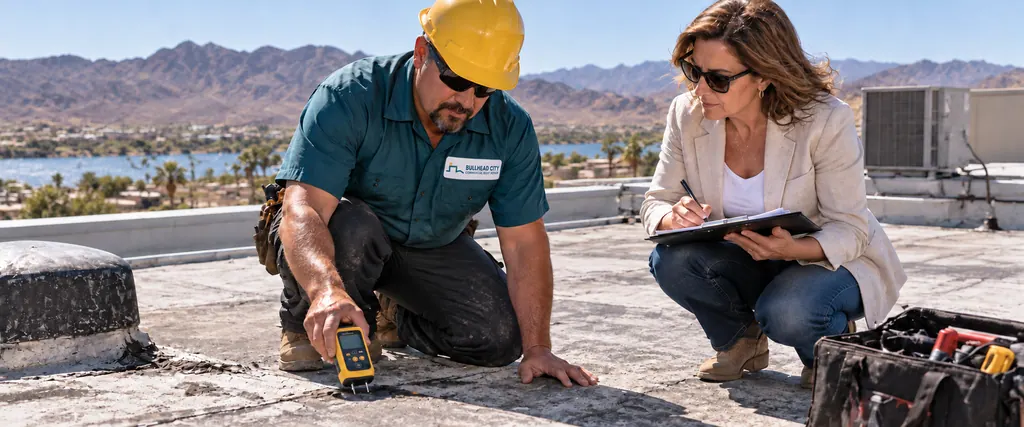
Wide and close photos of each torn area, plus interior stains, are dated before any temporary fix, following the state insurance department's advice to document damage first.
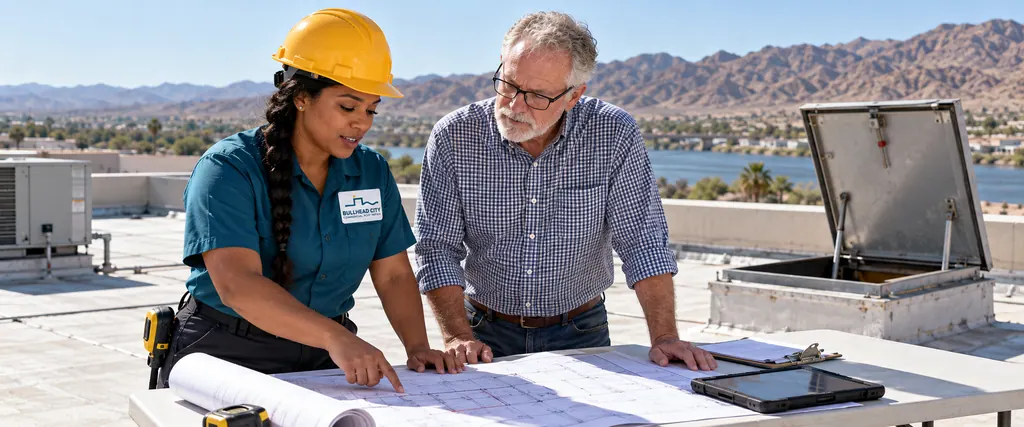
Loose sheet is weighted or temporarily secured, drains are cleared, and open areas are covered so rain stays out while the roof dries.
Topock is unincorporated, so Mohave County Development Services issues the permit for the permanent repair, confirmed before new membrane goes down.
Wet insulation is cut out, peeled membrane is replaced back to firmly adhered sheet, and wall flashing is rebuilt under a termination bar or counterflashing.
We also repair commercial roofs in these nearby communities.
Sun-worn flat roofs just north on the Oatman Highway, with seams closed before coating.
Steel roofs with rust at laps and screws, sorted panel by panel.
Retail roofs where leaks travel along the deck between suites.
Active roof leaks held with logged stopgaps until the permanent repair.
Start with safety and stopping water, then document. Keep staff off the roof until loose metal and lifted edges are checked, look from the ground for peeled membrane or bent coping, clear reachable drains only if it is safe, photograph inside damage, and watch National Weather Service Las Vegas alerts for follow-up storms before calling for an inspection.
Most wind damage is local and repairable. Peeled sections are cut back to firmly adhered membrane and replaced. Replacement comes up when large areas have lifted or the insulation under them is soaked across much of the roof.
Fastening and termination. Wall flashing ends under a termination bar or counterflashing, edge metal is fastened at the spacing its maker calls for, and perimeter membrane is fully adhered. Repairs rebuild those details where wind found a gap.
Often it takes a while. Peeled membrane can sit for days before rain finds the opening, and a lifted wall flashing may leak only in wind-driven rain. A roof check after each strong gust catches damage before it shows on a ceiling.
Wind lifts at the weakest edge. An open lap, a loose flashing top, or a section with failed adhesive gives gusts a place to get under the sheet, and each gust pulls it further back.
Only after someone checks it is safe. Loose metal, peeled sheet, and lifted edges can shift underfoot or catch the wind. Look from the ground and from inside first, and photograph what you can see.
Plan on one for the permanent repair. Topock is unincorporated Mohave County, so county Development Services issues permits, and the county's reroof exemption covers residential work only. Dry-in work comes first while the permit is arranged.
Before the next rain, if possible. Weighted sheet and covered openings keep water out of the insulation, which keeps the eventual repair smaller. The permanent repair follows once the deck is dry and the permit is in hand.
Tell us what the wind lifted and where water shows inside. We dry it in, document it, and rebuild it.
Leave a name and number and we will call about the leak or repair. Or call now: +1 (928) 436-4825.